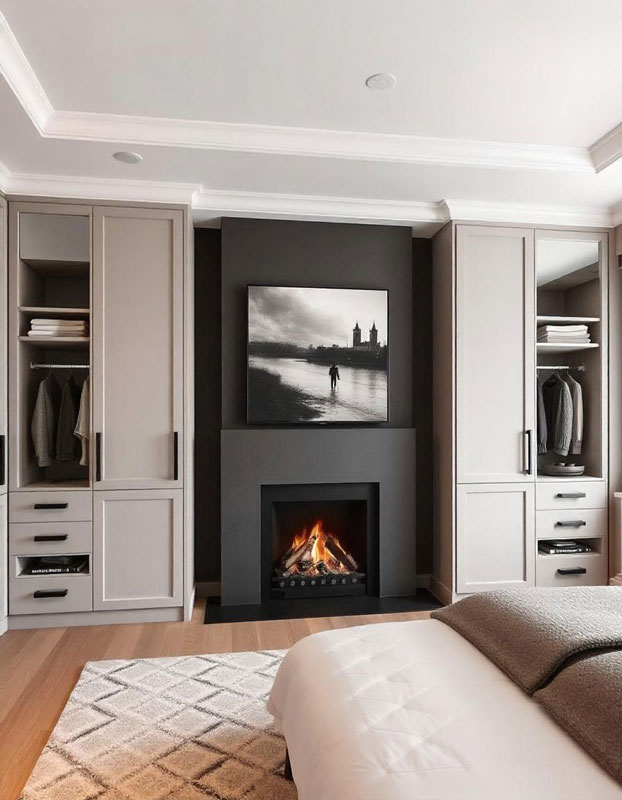

Almost every Victorian and Edwardian house in London has them: the two recesses either side of the chimney breast. Used well, they become the most practical and often the most admired part of the room. Left empty, or filled with furniture that does not quite fit, they rarely earn their space.
Alcove units are one of the projects our bespoke carpentry team is asked about most, so we have gathered the questions homeowners put to us before they commission a pair, with straight answers.
1. What exactly are alcove units?
Alcove units are fitted cupboards, shelves or a combination of the two, built into the recesses either side of a chimney breast. Because they are made for one specific space, they sit flush against the walls and use the full height and width of the alcove, rather than standing in it like a separate piece of furniture.
In London period homes, they are often the simplest way to add generous storage to a sitting room, dining room or bedroom without giving up any floor space in the middle of the room.
2. Is bespoke really better than an off-the-shelf bookcase?
For most period homes, yes, and the reason is fit. Walls in older houses are rarely perfectly straight or square, while ready-made furniture comes in standard sizes. An off-the-shelf bookcase usually leaves:
- gaps at one or both sides, where dust collects
- wasted space between the top of the unit and the ceiling
- a gap at the back, because the unit is pushed forward by the skirting board
Bespoke alcove units are measured, made and fitted for that particular alcove. They are scribed to follow the walls, built around the skirting and taken up to the ceiling or cornice, so they look like part of the house rather than something placed in it.
3. How deep should alcove shelves and cupboards be?
It depends on what you want to store and on the depth of your chimney breast. As a general guide:
- Open shelves for books: around 25 to 30 cm deep suits most paperbacks and hardbacks without wasting space.
- Base cupboards: usually a little deeper than the shelves above, so the top can be used as a display surface.
- Overall depth: most homeowners prefer the units to finish level with, or slightly behind, the face of the chimney breast, so the fireplace remains the focal point of the room.
We measure every alcove individually at the free on-site consultation and agree the depths with you before anything is made.
4. Cupboards, shelves or both?
The most popular layout in London homes is a combination: closed cupboards below for the things you would rather not have on show, and open shelves above for books and ornaments. Full-height cupboards suit rooms where storage matters more than display, such as a bedroom or a busy family room, while floor-to-ceiling shelving suits a study or a sitting room full of books.
A useful rule designers follow is to line up the base cupboards or shelves with an existing feature, such as the mantelpiece or a windowsill, so the room feels balanced (Homes & Gardens). If you are considering a wardrobe rather than shelving, our guide to building a fitted wardrobe in an alcove covers the options.
5. What are bespoke alcove units made from?
We predominantly use MDF to build our clients’ bespoke furniture. As an engineered board, it is hard to crack or flex, and its smooth surface makes it easier to sand, prime and hand-paint to a high standard.
For a painted finish, which is what most homeowners choose for alcove units, this gives a cleaner and more stable result than solid timber, which naturally moves as temperature and humidity change through the year. You can read more about the different timbers and boards on our materials page.
6. Will long shelves sag?
They can, if a shelf is too thin for its span or more heavily loaded than it was designed for. Books are heavier than most people expect, and a wide alcove filled with hardbacks puts a real load on each shelf.
A well-made bespoke unit avoids this by sizing each shelf for the width of the alcove and supporting it properly along its length. If you plan to store a large book collection, let us know at the consultation so we can allow for it in the design.
7. Can alcove units work around sockets, radiators and uneven walls?
Yes. Uneven walls are expected in period properties, and scribing the units to the walls is simply part of the job. Sockets and switches can usually be accommodated within the design, either by working neatly around them or by moving them into the unit.
Any change to electrical wiring should be carried out by a qualified electrician; in England, domestic electrical work must comply with Part P of the Building Regulations. Radiators are worth discussing at the consultation too, as enclosing a radiator reduces the heat it gives out to the room.
8. Can you build a TV unit into an alcove?
Yes. Custom-made TV units are part of our bespoke built-in furniture service, either within one alcove or as part of a scheme across the whole chimney breast wall. Planning cable routes and ventilation for equipment at the design stage keeps the finished unit tidy and free of trailing wires.
9. How long does it take, and is it built on site?
Every project is different, so we confirm the timescale with your quote. The process normally follows these steps:
- We visit to measure the space and talk through your plans.
- We send you a full, detailed quotation.
- Once the deposit is paid, we prepare drawings and revise them until you are completely happy.
- We build and fit the units on site, then finish and paint them.
Because no two alcoves are the same, we always build and fit on site, so each unit is made to the exact space it will occupy.
10. What colour should alcove units be painted?
There are two main approaches. Painting the units the same colour as the walls gives a calm, built-in look that suits smaller rooms. A contrasting colour, such as soft white joinery against deep green or navy walls, turns them into a feature of the room.
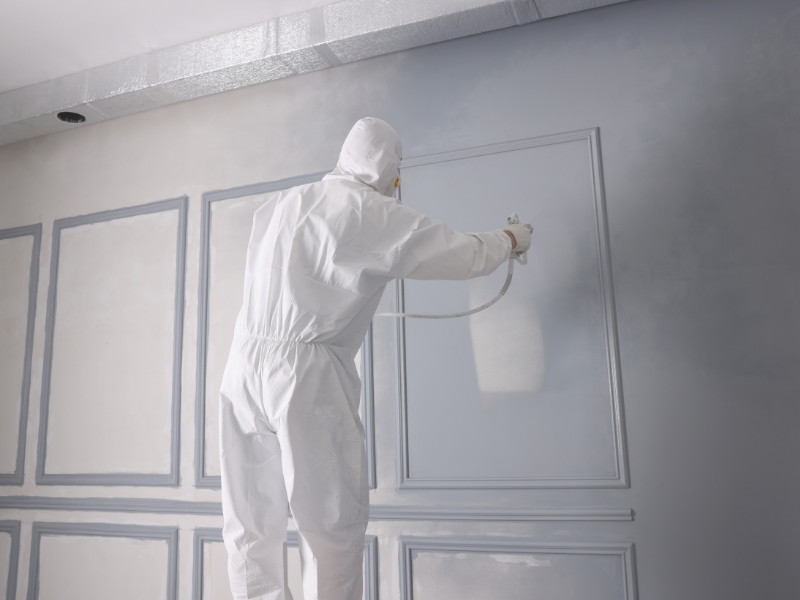
In period homes, an eggshell or satin finish on joinery tends to look more in keeping than high gloss, and it is easy to wipe clean. Our painting and decorating FAQs explain the different finishes in more detail.
11. What affects the cost of alcove units?
Every alcove is different, which is why we provide a written quote after visiting rather than an online estimate. The main factors are:
- the size of the alcoves, and whether you want one unit or a matching pair
- the layout: cupboards, shelves or both, and the number of doors
- the door style, mouldings and other details
- handles, hinges and any integrated lighting
- painting and finishing
- any electrical work needed for sockets, lighting or a TV
If you would prefer to spread the cost, finance options are available, subject to status.
Planning alcove units for your home?
Whether you would like a single bookcase or a matching pair of cupboards either side of the fireplace, our team would be glad to help. Book your free on-site consultation or call us on 020 4638 9601, and we will give you a clear, written quote.